
Middlesex County Criminal Court Records
A criminal court record is the official court file opened after charges are filed. It is not just a charge list. It can track the case from arraignment through motions, hearings, pleas, trial, disposition, and sentencing. In Middlesex County, the Clerk of the Superior Court maintains court files through the Connecticut Judicial Branch structure.
Local criminal and motor vehicle cases may appear under Middlesex Judicial District or Middletown Geographical Area 9, both tied to the state courthouse in Middletown. The Judicial District handles serious criminal matters along with other Superior Court work. The geographical area court handles arraignments, misdemeanors, felonies requiring GA handling, motor vehicle matters, and daily criminal or motor vehicle dockets.
Search Middlesex County Criminal Records
The official online route for pending criminal and motor vehicle cases is the Judicial Branch pending criminal and motor vehicle defendant search. The form asks for a last name and allows narrowing by first initial, birth year, year range, court location, and category type. Middlesex searches should use Middlesex JD and Middletown GA 9 when a local court filter is needed.
The pending defendant search source is assigned to this criminal court records page.
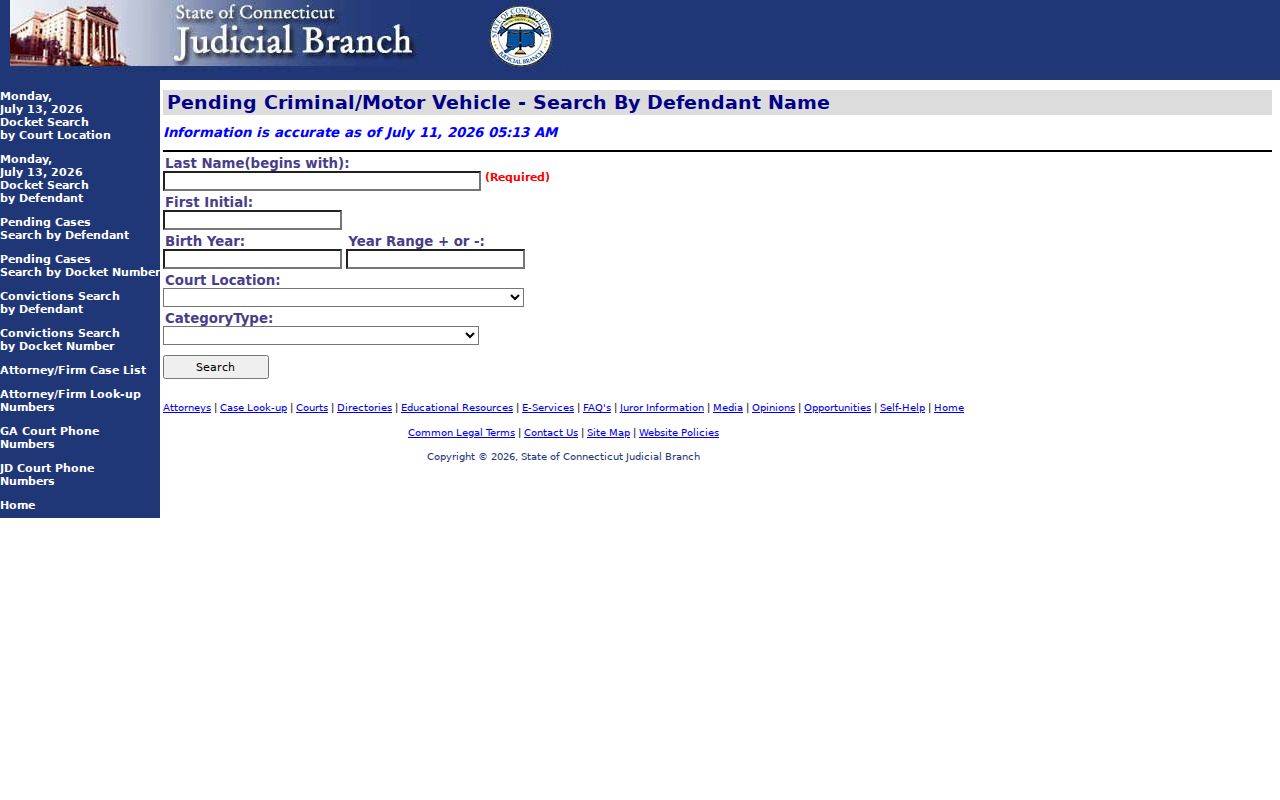
This search source is central because pending Middlesex criminal court records are usually found by defendant name before any certified copy request.
- Open the pending criminal and motor vehicle defendant search.
- Enter the last name, then add first initial or birth year when needed to narrow results.
- Choose Middlesex Judicial District or Middletown Geographical Area 9 if the case is local and the filter helps.
- Review the docket number, location, charge, event, status, and disposition data where shown.
- Contact the Clerk of the Superior Court for certified copies or document-level records that are not online.
Conviction searches use a separate Judicial Branch option. The research notes that criminal conviction information is generally displayed no more than 10 years after sentencing unless Practice Book limits or erasure rules shorten access. For the charge-focused path after an arrest, see Middlesex County arrest records and court charges.
Middlesex County Criminal Case Flow
Criminal court records change as the case moves. The docket may start with charges and arraignment activity, then add pretrial events, motions, plea or trial events, disposition, and sentencing. Some entries are public case data. Some documents behind the entries may require a clerk request, and restricted case types may not appear in ordinary public lookup.
Case flow: Charges Filed › Arraignment › Pretrial / Motions › Plea or Trial › Disposition › Sentencing
| Stage | What Happens |
|---|---|
| Charges filed | Police arrest or referral moves to prosecutorial review, and formal charges enter the court record. |
| Arraignment | The defendant appears in court for advisement, plea or bond issues, and scheduling. |
| Pretrial / motions | The docket may show appearances, motions, orders, continuances, bond events, or warrant activity. |
| Plea or trial | The case may resolve by plea, trial, dismissal, nolle, or other disposition. |
| Sentencing | If there is a conviction, the record may show sentence, probation, fines, restitution, costs, or related conditions where public. |
What Middlesex County Criminal Records Show
A Middlesex criminal court record should be read as a court file, not a police report. The public lookup can identify the docket, court location, defendant, pending charge information, hearings, disposition, and sentence where public. A police narrative, full arrest report, or custody profile usually sits outside the court file.
| Field | What It Shows |
|---|---|
| Docket number | The official criminal or motor vehicle case identifier used by the Judicial Branch and clerk. |
| Court location | Middlesex JD, Middletown GA 9, or another Connecticut court location tied to the case. |
| Defendant | The person accused in the court case, with name filters used for lookup. |
| Charges | The filed accusations, which may be pending, amended, reduced, dismissed, nolled, or resolved by plea or verdict. |
| Events | Arraignment, appearances, motions, orders, hearings, continuances, failure to appear, violation of probation, or warrant events. |
| Plea and disposition | The defendant's plea and the charge or case outcome where public. |
| Sentence | Probation, fines, restitution, bond, costs, custody-related sentence entries, or other sentencing information where public. |
| Redactions | SSNs, protected addresses, medical details, minor names, victim-protected information, sealed data, and erased records are withheld. |
Middlesex County Charges vs Convictions
A charge is an accusation filed in court. A conviction is a formal finding or plea of guilt. Middlesex criminal court records can show charges that never became convictions because they were dismissed, nolled, reduced, amended, or resolved another way. A record search should always read the final disposition, not just the first charge listed.
| Charge | Conviction | |
|---|---|---|
| Meaning | An accusation filed in criminal or motor vehicle court. | A guilty plea or formal finding of guilt. |
| Timing | Appears early after filing and may change as the case moves. | Appears only after disposition by plea or verdict. |
| Record risk | Can be dismissed, amended, nolled, erased, or sealed. | May be shown in conviction lookup for a limited period, subject to restrictions. |
| Best check | Read the docket status and charge events. | Read disposition and sentence entries. |
Read Middlesex County Dispositions
Disposition means outcome. A guilty finding or plea can lead to sentencing. A dismissal ends a charge without conviction. A nolle is the prosecutor's decision not to proceed on a charge at that time. A not-guilty result means the charge did not result in conviction. A violation of probation entry means the court is addressing an alleged breach of probation terms.
Sentencing entries can include probation, fines, restitution, costs, bond-related data, or custody-related terms where public. The online docket may not show every financial or supervision detail. Certified copies and official proof should come from the Clerk of the Superior Court.
The docket should be read charge by charge. One count can be dismissed while another is resolved by plea, or a charge can be reduced before sentence. That is why the disposition field is more important than the first charge label when someone is trying to understand the final public court record.
Middlesex County Sealed vs Expunged Records
Connecticut uses erasure language for qualifying criminal records. Erasure can remove records from ordinary public disclosure after not-guilty findings, dismissals, pardons, and other qualifying events under Conn. Gen. Stat. Sec. 54-142a. A sealed record is hidden or limited by law or court order, but it is not the same concept as erasure.
The Connecticut criminal record erasure statute source is assigned to this page.
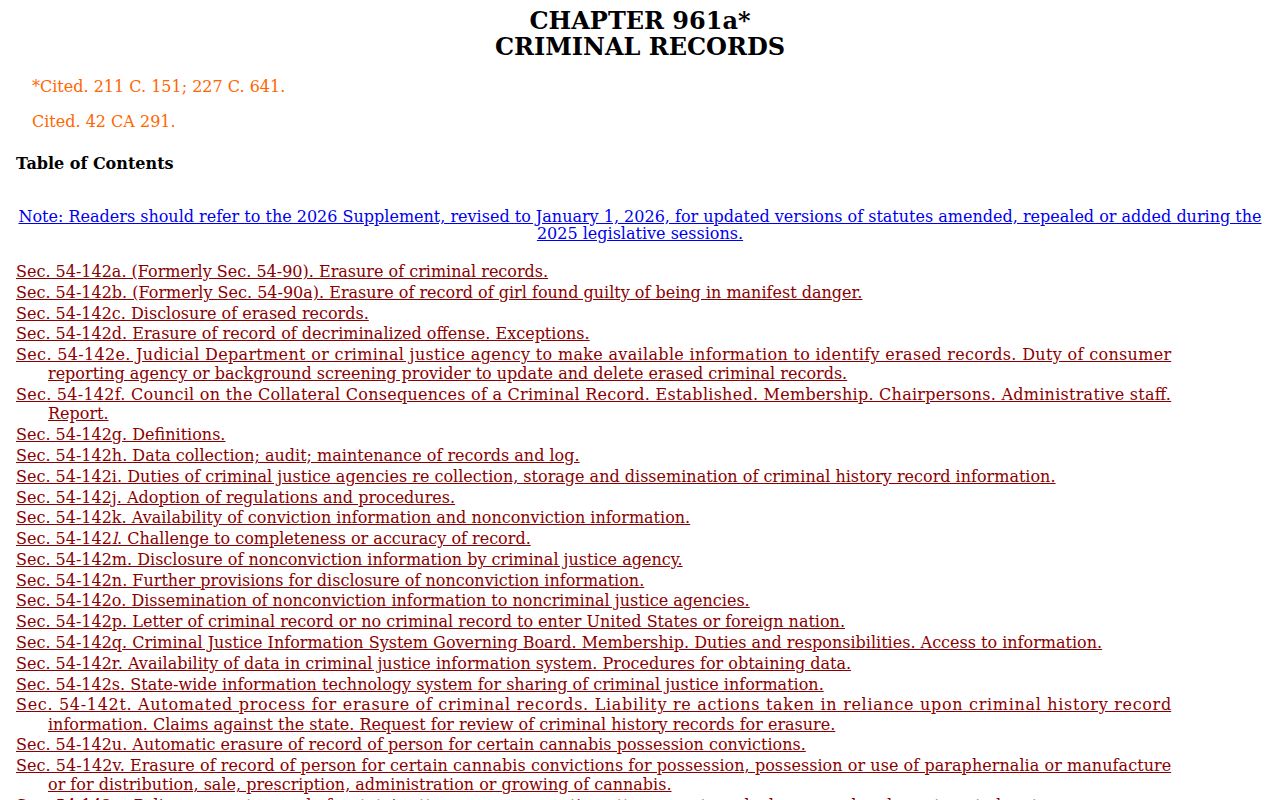
Erasure rules explain why some older Middlesex criminal court records may no longer appear in public lookup.
| Sealed | Expunged / Erased in Connecticut | |
|---|---|---|
| Public visibility | Hidden or limited by court order or law. | Removed from ordinary public disclosure under qualifying erasure rules. |
| How it happens | Often by statute, rule, or court order. | By statutory eligibility, pardon, petition, or automatic Clean Slate process where applicable. |
| Lookup result | May not appear, or may show limited public status. | Usually absent from public criminal lookup once erased. |
| Best confirmation | Ask the clerk or seek legal advice for access questions. | Use official channels because absence from public lookup is not proof by itself. |
Public Middlesex County Criminal Records
Public access to Middlesex criminal court records comes from state court systems and is limited by court rules, sealing, erasure, and confidentiality statutes. The Connecticut FOI Act helps with executive-branch and municipal records, such as some police reports, but court-record access is controlled by Judicial Branch systems and court-specific restrictions. Use Conn. Gen. Stat. Sec. 1-210 as the public-record starting point and Sec. 54-142a for criminal erasure limits.
The juvenile matters confidentiality source is assigned to this criminal court records page.
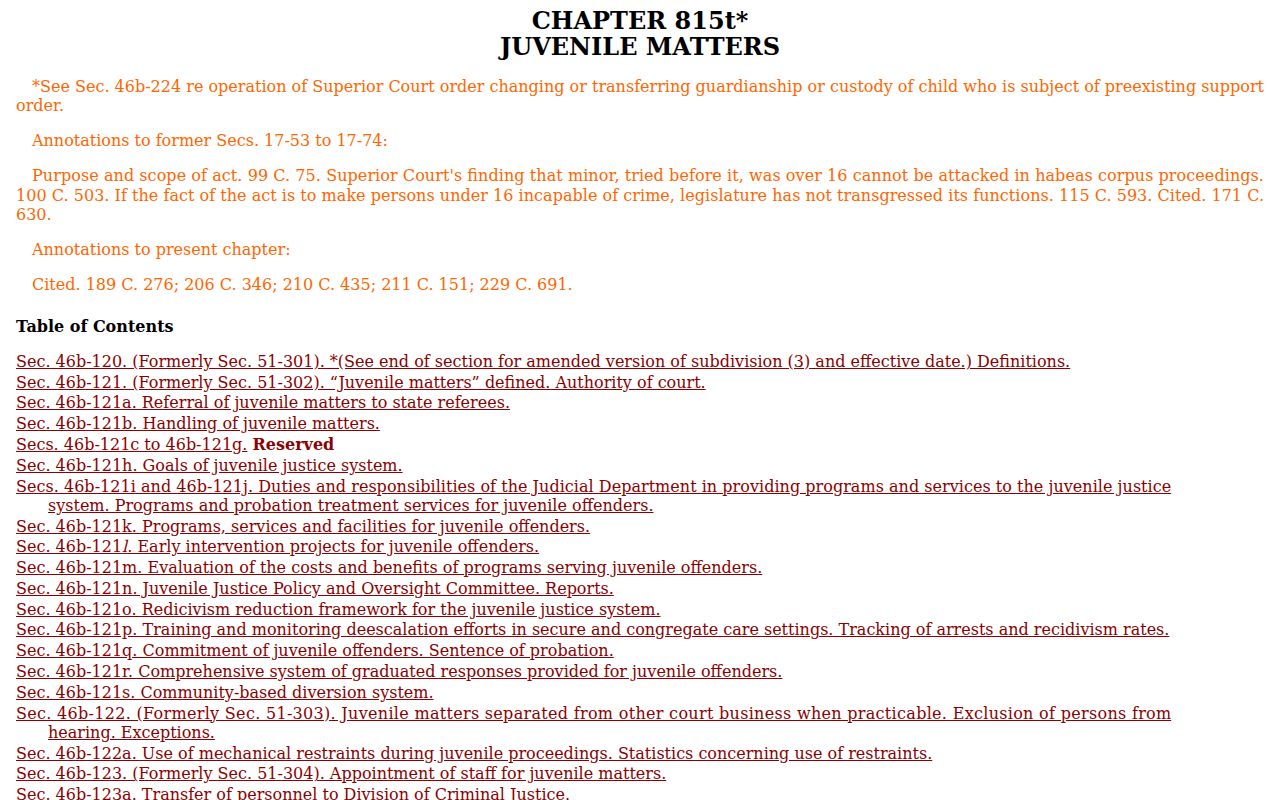
Juvenile confidentiality is a key reason some criminal-like court activity is not shown as an ordinary public criminal case.
Key Statutes:
Conn. Gen. Stat. Sec. 54-142a controls qualifying criminal erasure and public nondisclosure.
Conn. Gen. Stat. Sec. 46b-124 keeps juvenile matter records confidential except for statutory exceptions.
Middlesex County Clean Slate Limits
Clean Slate can affect public criminal court record searches. Connecticut reported that erasures resumed after delays tied to aging data systems and data-quality issues, with many records partially or fully erased and more expected. That update matters for Middlesex County criminal court records because older public results may disappear when a case qualifies.
The Clean Slate Connecticut source is assigned to this page.
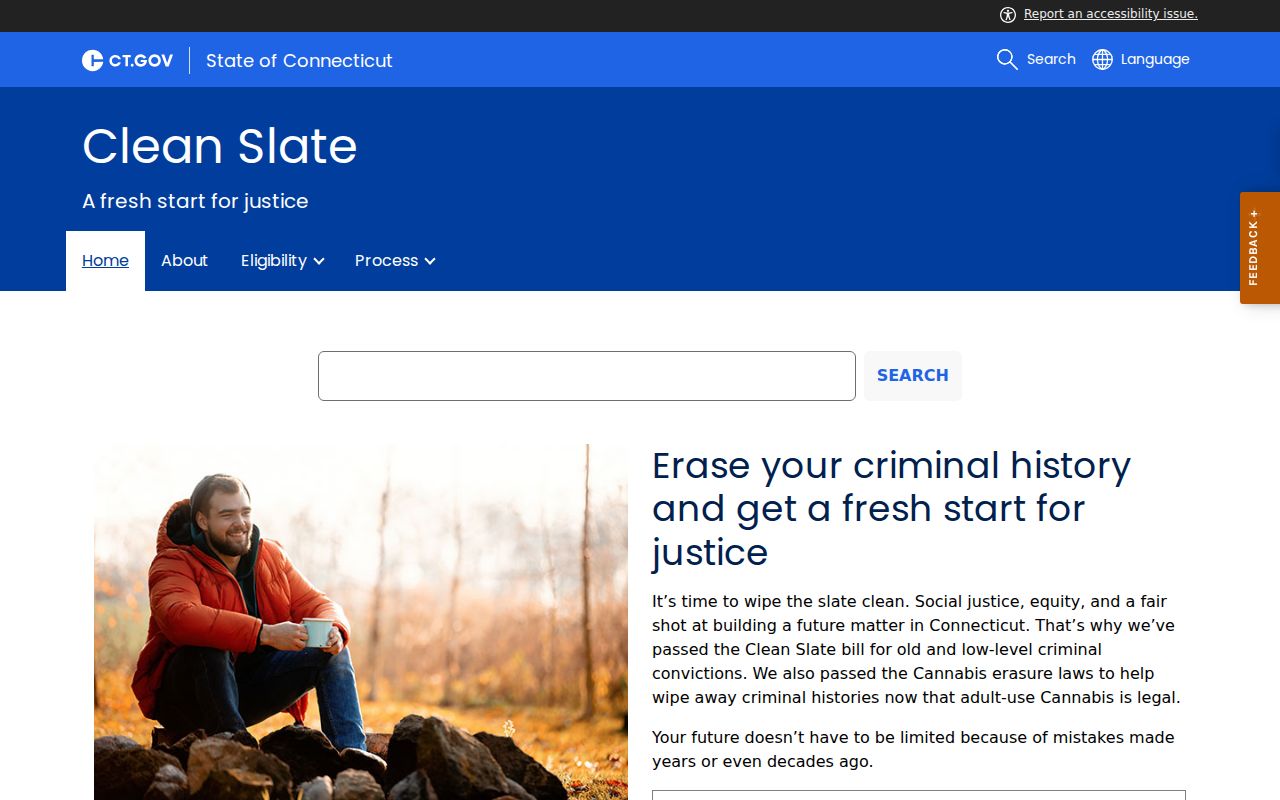
Clean Slate updates should be read with care because public lookup results can change after erasure processing.
Restricted Middlesex County Criminal Records
Restricted criminal court records include juvenile matters, youthful offender matters, sealed records, erased records, protected addresses, minor names, victim-protected information, mental health details, financial account numbers, and Social Security numbers. Youthful offender cases and juvenile cases are not displayed in the public criminal conviction lookup. Infraction and violation convictions are also excluded from that conviction search.
For a newly arrested person who does not appear in the criminal court lookup, check timing and system type. A person may be in police booking, cited and released, awaiting arraignment, or in DOC custody before public court information updates. Custody status belongs in DOC inmate information, while the full criminal case file belongs in the Judicial Branch docket and clerk record.
The Public Defender office and State's Attorney office do not replace the clerk record. The prosecutor decides and presents charges, defense counsel represents eligible defendants, and the Clerk of the Superior Court maintains the case file. For official copies of dispositions, orders, or docket sheets, use the clerk channel after identifying the docket number in the public lookup.