
Middlesex Clerk of Superior Court
Connecticut does not use a separate elected local filing officer for Middlesex court records. The public court-file office is the Clerk of the Superior Court at the Middlesex Judicial District courthouse. That clerk maintains and provides access channels for Superior Court files, including civil, family, criminal, motor-vehicle, housing, small claims, juvenile matters, and child protection session records, subject to public access rules and confidentiality limits.
For a marriage certificate, birth record, death record, land record, or many municipal records, the reader should use the town clerk, registrar, health department, or DPH channel. For a divorce decree, civil judgment, criminal conviction, motor-vehicle docket, small-claims judgment, restraining-order filing, or certified court copy, start with the Superior Court systems and the Middlesex clerk. The clerk page should be read as a court-record profile, not as a town vital-record profile.
Clerk of the Superior Court
Office: Middlesex Judicial District Chief Clerk's Office
1 Court Street
Middletown, CT 06457
860-343-6400
Fax 860-343-6423
Hours 9:00 a.m. to 5:00 p.m.; doors open at 8:30 a.m.
Middlesex Clerk Records Duties
The Clerk of the Superior Court is the courthouse access point for case files and procedural filing channels. The clerk does not replace legal advice, but the office can identify public-counter steps, receive filings through allowed channels, calculate current court-copy fees, and direct users to the correct form or case lookup. The Court Service Center and Law Library are also in the courthouse research file for people who need forms or legal research support.
- Maintains Superior Court case files and docket access under Judicial Branch rules.
- Receives and processes filings in civil, family, criminal, motor-vehicle, housing, small-claims, and related matters.
- Handles public-counter copy and certified-copy requests when records are public and identifiable.
- Directs users to statewide case lookups, Judicial Branch WebForms, fee pages, and ADA accommodation contacts.
- Applies sealing, erasure, juvenile confidentiality, and other access limits before releasing records.
The Judicial Branch WebForms library is the official form source for many court filing needs.
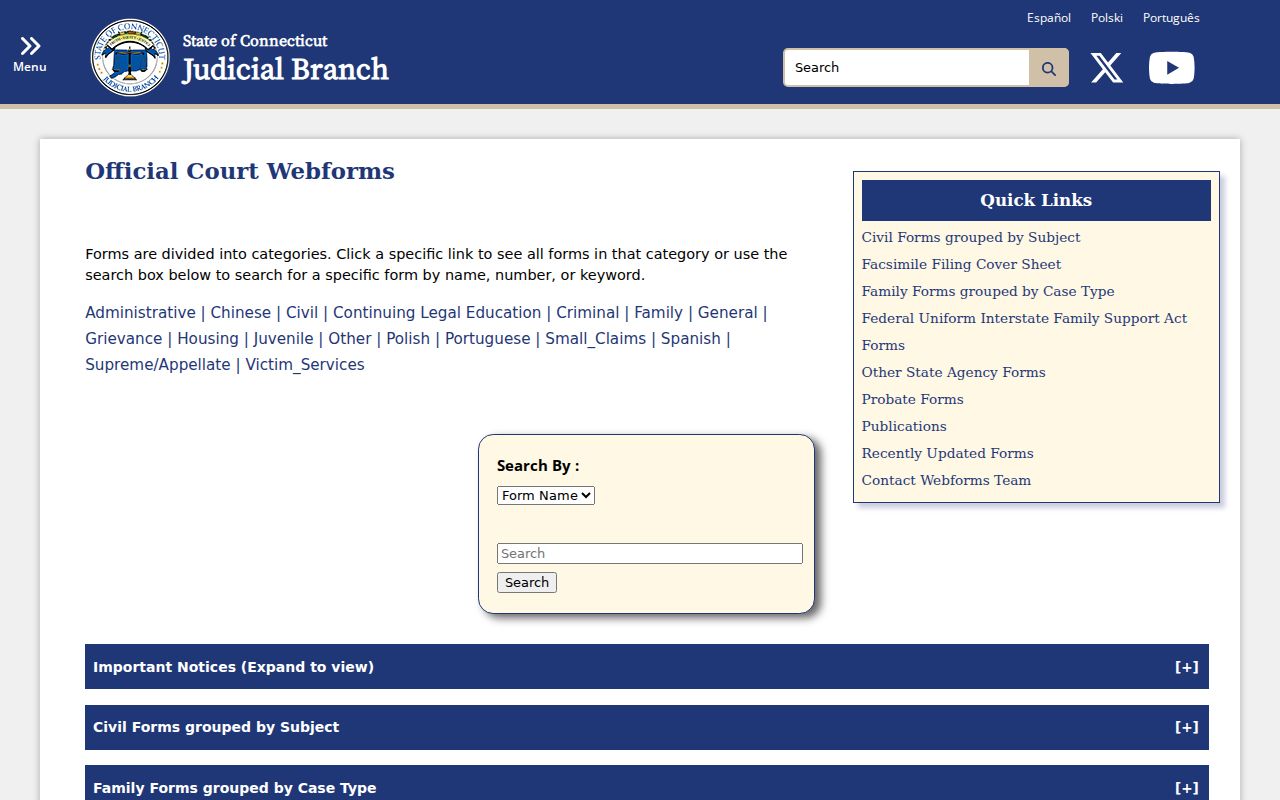
Those forms are statewide court forms, which fits Connecticut's unified court structure for Middlesex Superior Court records.
Middlesex Clerk Access Channels
The best clerk request usually starts online. Search the right statewide portal first, then use the docket number when contacting or visiting the clerk. Civil, family, housing, and small claims records use the civil inquiry system. Criminal and motor-vehicle records use the criminal/motor-vehicle lookup. Public lookup pages give case status and docket information, but they do not make every filing document downloadable.
| Channel | Use | Official Source |
|---|---|---|
| Online case lookup | Find docket numbers, party names, case type, status, and events. | Judicial Branch Case Look-up |
| In person | Request public copies or certified copies at the clerk counter. | 1 Court Street, Middletown, CT 06457 |
| Phone | Ask about copy routing or case-location questions. | Chief Clerk's Office 860-343-6400 |
| Send a written copy request with enough case detail and return contact. | Use the courthouse address and correct case caption. | |
| Forms | Browse or search court forms by court area and form title. | Judicial Branch WebForms |
| ADA | Request a court-location accommodation. | Judicial Branch ADA contacts |
Note: The clerk handles court-file access, while Connecticut town offices and DPH handle most vital records.
Request Certified Middlesex Copies
A certified copy is a clerk-attested copy used when an ordinary printout is not enough. Divorce decrees, judgments, dispositions, and orders often need certification for agencies, employers, licensing offices, or out-of-state courts. The clerk needs enough information to find the case and identify the exact document. A broad request for "my records" is slower and may not be workable without names, docket number, case type, and document name.
- Search the official case lookup by case type and save the docket number.
- Confirm the case location is Middlesex Judicial District or Middletown Geographical Area 9 when that applies.
- Identify the exact document, such as judgment, decree, disposition, order, or docket sheet.
- Contact the Clerk of the Superior Court by phone, mail, or in person with party names and return contact information.
- Ask the clerk to calculate current copy and certification fees from the Judicial Branch fee page.
- Follow clerk instructions for payment, pickup, mailing, or any required form.
Some copies cannot be released through ordinary public-counter service. Sealed filings, erased criminal records, juvenile records, adoption files, protected family information, and certain mental-health records are restricted by statute, court rule, or court order.
Middlesex Records Request Inventory
The research did not locate a separate local request portal because Connecticut uses state Judicial Branch systems for Superior Court records. A mail, phone, or in-person request should still include a clear field inventory. That helps the clerk locate the case, decide whether the record is public, and calculate any fee.
Requests for certified copies should be narrower than general name searches. The clerk handles court files, but the public counter is not a substitute for the statewide lookup tools. Searching online first gives the docket number, court location, and case category that make a copy request more precise.
| Request Field | Required | Notes |
|---|---|---|
| Docket number | Strongly recommended | Use the public lookup first when possible. |
| Party names | Yes | Include full names and role if known. |
| Case caption | Recommended | Useful for civil, family, and criminal files. |
| Case type | Recommended | Civil, family, criminal, motor vehicle, housing, or small claims. |
| Document requested | Yes | Judgment, decree, disposition, order, docket sheet, or other named filing. |
| Certified or plain copy | Yes | Certification changes handling and fee calculation. |
| Return contact | Yes | Include mailing address, phone, or other response detail requested by the clerk. |
Middlesex Clerk Fees
Superior Court copy, certification, filing, and motion fees are set through the Judicial Branch fee page, not through a Middlesex County fee schedule. The research file instructs builders not to invent fees that were not listed. For that reason, the table below identifies the fee channel and the type of charge rather than inserting unsupported dollar amounts.
The Superior Court fee page is the official source for current court fees.
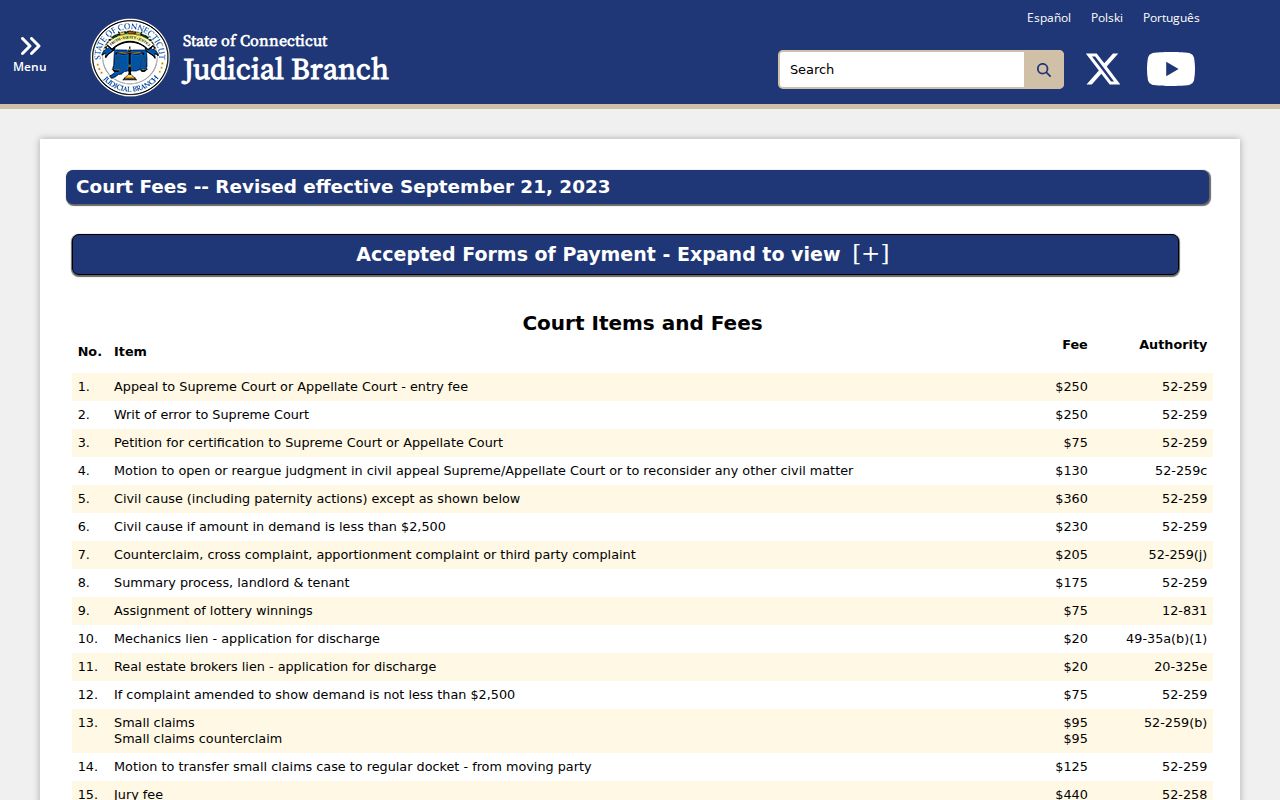
Because fee amounts can depend on case type and request type, the clerk should calculate the amount for a specific certified-copy request.
| Fee Topic | Amount Handling |
|---|---|
| Plain court copy | Verify on the Superior Court fee page or with the clerk. |
| Certified court copy | Verify current copy and certification charges with the clerk. |
| Civil filing fee | Use the Judicial Branch fee page for current filing categories. |
| Family filing fee | Use the Judicial Branch fee page and case-specific filing rules. |
| Probate fee | Separate Probate Court calculators apply, not Superior Court clerk fees. |
| Marriage license or certificate | Town vital-record fee or DPH channel, not Superior Court clerk fee. |
Middlesex Clerk Forms and Help
The Judicial Branch WebForms library lets users search and browse by court area and form title. Individual forms vary by case type. Some filings may be downloaded and filed with the clerk; others may be handled through e-filing where allowed. The Court Service Center at the Middlesex courthouse can help self-represented parties with procedural information and forms, and the Law Library supports legal research.
- Judicial Branch WebForms for statewide court forms.
- Court Service Center at 860-343-6499 for procedural help and forms.
- Law Library at 860-343-6560 for legal research support.
- Chief Clerk's Office at 860-343-6400 for clerk counter and records questions.
- Electronic Devices in Superior Court Facilities for courthouse device policy.
The Connecticut Superior Court page is the broader statewide source for divisions, forms, fees, court directions, and special sessions.
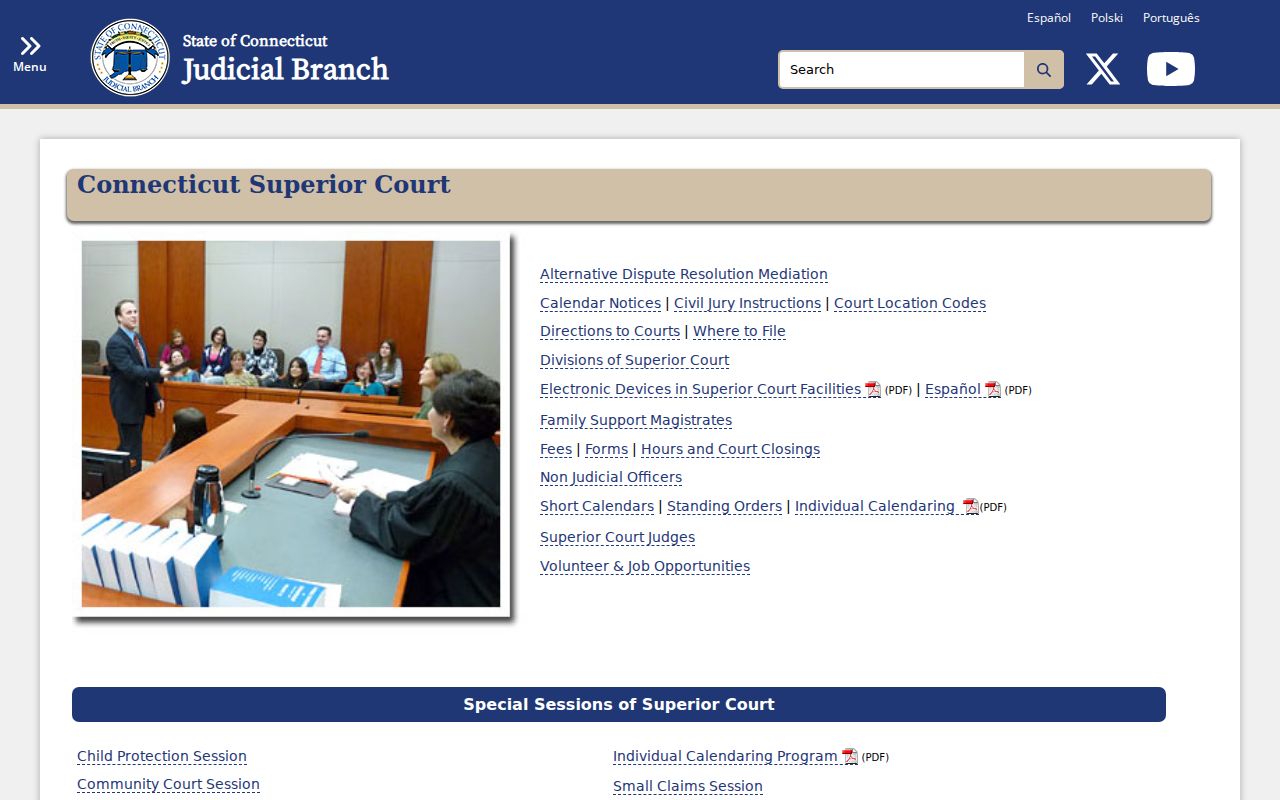
That Superior Court context is important because the Middlesex clerk works inside a state trial-court system rather than a county-run records office.
Restricted Middlesex Clerk Records
Public access to court records is limited by Judicial Branch rules, court orders, and Connecticut statutes. Conn. Gen. Stat. Sec. 1-210 generally recognizes public-record inspection and copies unless a law or exemption restricts access, but court files are also controlled by court-specific rules. Conn. Gen. Stat. Sec. 54-142a covers criminal erasure, and erased records are not released as ordinary public records. Conn. Gen. Stat. Sec. 46b-124 makes juvenile matter records confidential except for allowed access.
Family files can include restricted information such as financial affidavits, protected addresses, minors' information, domestic violence details, and sealed orders. Criminal files can be absent from public lookup because of erasure, youthful offender status, a sealed order, age limits on conviction display, or a different docket/name. When official proof is needed, the clerk is the public court-file starting point, but legal advice should come from counsel.
The clerk also does not hold every record that includes a Middlesex County name. Marriage certificates, birth records, death records, and land records are town or state vital-record channels. Probate records are handled by Probate Court districts. DOC custody records and DMV driver histories are state agency records. Sending those requests to the Superior Court clerk slows the search because the office can only answer for court files in its system.